
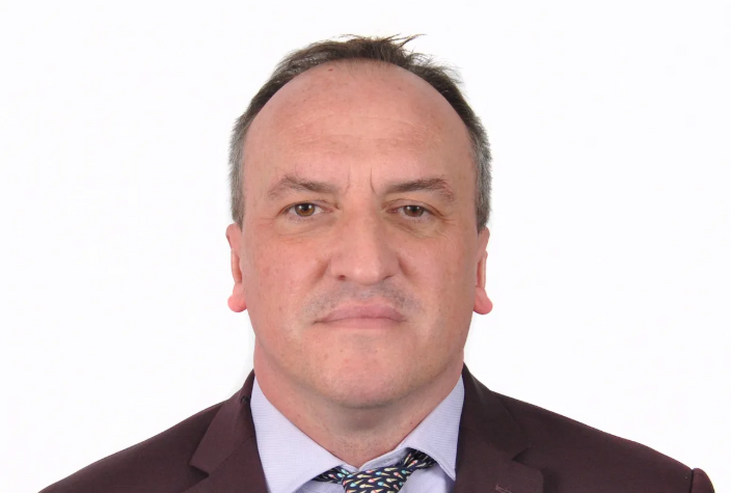
Paul Eardley-Taylor | Africa is emerging as the next frontier for global gas growth
According to the Energy Institute's report, Statistical Review of World Energy, gas makes up 25% of the world's primary energy supply, but only 17% of primary energy use in Sub-Saharan Africa (SSA), excluding North Africa.
After several years of sporadic progress SSA gas is on the verge of a material break-out. This advent and the broader industry form essential parts of the discussions that are being engaged at the Africa Energy Week 2026.
Around 250 million Tons Per Annum (MTPA) of Liquified Natural Gas (LNG) is under construction globally (the United States is currently leading, but Mozambique should not be ignored). This will likely lead to 2 - 3 years of a supply glut from 2029.
Accordingly, to maintain balance, the global LNG market needs to find new sources of demand. Within SSA, markets such as South Africa, Kenya, Côte d'Ivoire and Namibia may be the next to import LNG.
In addition to this, the ongoing disruption to oil and LNG supplies through the Strait of Hormuz has reinforced the importance of geographic and geopolitical diversification in global energy markets.
This presents a significant opportunity for Sub-Saharan Africa, particularly Nigeria and Mozambique, which have the potential to supply substantial LNG volumes outside the world's most established energy chokepoints.
The three countries leading Africa's gas breakthrough
Côte d'Ivoire is exciting as it has rare baseline of a strong Gas to Power sector (GTP). To this, ENI have successfully completed two phases of its Baleine oil development (which includes oil and associated gas) and taken FID on a third phase. Consequently, Côte d'ivoire's demand for power is now growing so fast that agreements have been signed with Exmar for a 10-year FSRU deal. Accordingly, Côte d'Ivoire may well be the SSA template for developing GTP.
Nigeria's federally mandated "Decade of Gas" made a steady start but has accelerated since 2023. Around nine federal executive orders have been passed, intending to improve fiscal terms and increase gas production. Several gas financial investment decisions (FIDs) have now occurred, with the expectation of many more to follow before the December 2029 deadline. The intention of the gas FIDs is to fill Nigeria LNG (which will increase to 30 MTPA capacity from 2027) and increase domestic supply towards a 12 Bcfd 2030 target.
Accordingly, Nigeria may become the SSA template for increasing LNG output in parallel with domestic gas (including SSLNG).
Lastly, after Force Majeure-driven delays, Mozambique is now making material LNG progress. Coral South's 3.4 MTPA of operational LNG will be added to by a current 16.7 MTPA under construction (Coral North and Mozambique LNG). The world-scale Rovuma LNG (18.6 MTPA) is expected to take FID in late 2026. Follow-on projects (e.g. FLNG 3) are expected, and Mozambique could have ¬80 MTPA capacity by 2034.
Significantly, Mozambique also could sell piped gas, Small Scale LNG and GTP to its regional neighbours (perhaps as many as 11 countries) and by 2040 could be the ''Norway of East Africa''.
As such, Mozambique could be the pathfinder for SSA energy integration.
Markets to watch:
Beneath these trailblazers are markets for whom gas is presently of no minor to moderate importance, but a major option, where decisions taken in the next months or couple of years will influence the 2030s.
Firstly, Ghana is gradually connecting itself (GGC plan a new West East pipeline and industrial consumption is growing) with Tema LNG potentially, finally entering service after 2027. Secondly, Namibia has significant domestic, associated gas in its Orange Basin. Whilst the oil FIDs will lead and gas will be reinjected (for example, Venus reinjects 550 MMSCFD) there will need to be a Gas Master Plan to produce this gas from the mid-2030s.
Thirdly, South Africa has two major decisions to take. First is GTP. 5 GW of additional GTP plans have recently been announced on top of an existing 3 GW. 2.8 GW of bids were received in May 2026 for an additional 2 GW allocation.
The challenge is aligning this with the parallel need to build LNG terminals (which do not yet exist). Then there is the need to develop its own Orange Basin (Namibia has drilled over 20 wells since 2022 and is expected to soon take its first oil FID - Venus).
Lastly, is Tanzania. Tanzania produced its initial gas back in 2004. However, after the discovery of major offshore gas in 2010, it did not capitalize on its first mover advantages. The 15 MTPA Tanzania LNG continues to await signature of its Host Government Agreement but could take FID in 2029/2030.
There is also the cross-cutting issue of converting onshore gas into energy, whether that is CNG, SSLNG, GTP or, occasionally, Helium. Across SSA this is being pursued in, among others: Botswana; Namibia; Nigeria; South Africa and Zimbabwe.
The next phase of Africa's gas growth story
Looking ahead, 2027 should be very exciting, with Domestic Gas, SSLNG and GTP adding to Africa's developing strengths in LNG exports.
Markets such as Lesotho, eSwatini, Mauritius and Zambia may soon be able to buy SSLNG or GTP, and that Uganda may supply its own oil production power supply needs with associated gas, it is clear that gas is definitely the emerging energy resource to support the continent's energy security with opportunities of energy integration and economic growth.
Unlocking these opportunities will depend on the coordination of infrastructure and innovative financing to support investors as they look on these projects and the growing demand of the resource.
*Paul Eardley-Taylor, Gas Sector Lead, Standard Bank Group




 Banking Biz proudly displays the "FAIR" stamp of the Press Council of South Africa, indicating our commitment to adhere to the Code of Ethics for Print and online media which prescribes that our reportage is truthful, accurate and fair. Should you wish to lodge a complaint about our news coverage, please lodge a complaint on the Press Council's website, www.presscouncil.org.za or email the complaint to enquiries@ombudsman.org.za. Contact the Press Council on 011 4843612.
Leave a Reply