
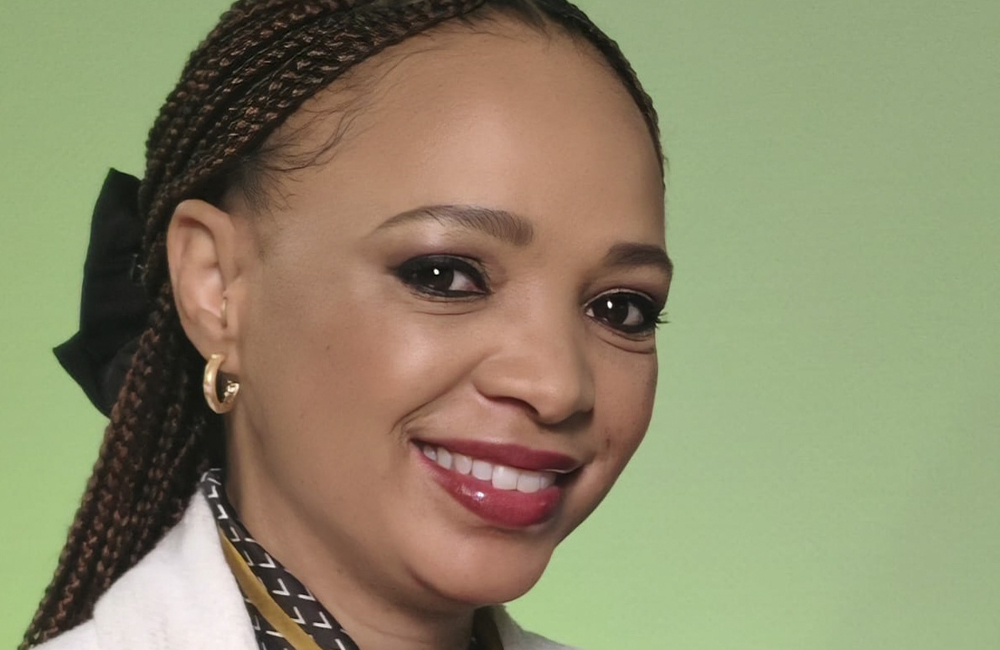
Charmaine Moola | Why SA's side-hustle generation is thinking differently about money
Young South Africans do not need to be told to start a side hustle. Finding different ways to earn has long been part of life in a country where formal employment and a single salary cannot always provide financial security. What deserves more attention is the financial reality behind the hustle.
For many young people, income no longer arrives as one predictable amount on one predictable day. It may come from freelance work, online sales, content creation, part-time employment or a small business. Often, it comes from several of these sources at once.
The 2025 Old Mutual Savings & Investment Monitor found that 75% of surveyed working South Africans aged 18 to 29 had multiple income sources. The research focused on employed South Africans earning at least R8 000 a month, so it does not represent every young person. However, it demonstrates how established multiple income lives have become among working youth.
The important question is therefore not whether young people can find different ways to earn. It is whether they can turn irregular income into lasting financial security.
More income streams do not guarantee financial wellness
Someone can earn from several sources and still struggle to plan. A strong sales month may be followed by weeks without income. A completed project may only be paid for much later. Money received by a small business may already be committed to stock, data, transport, suppliers or tax.
Traditional financial advice is usually built around a fixed salary and monthly payday. That model becomes harder to apply when both the timing and value of income change.
For people earning irregularly, financial wellness means more than managing money during a good month. It means remaining financially stable during a quiet one.
Yet young people may be more financially intentional than stereotypes suggest. The 2025 Gen Z Economy Report, based on responses from more than 900 South Africans aged 18 to 30, found that 90.52% were saving regularly. Emergency savings and education were leading priorities, while only 5.5% were saving for retirement.
This does not necessarily mean young people are ignoring the future. It may show how economic pressure shortens the planning horizon. When income is uncertain, preparing for the next emergency or educational expense naturally feels more urgent than preparing for retirement.
A different financial playbook
The 2025 Nedbank NedFinHealth Monitor found that working South Africans' overall financial-health score improved from 54.8 in 2024 to 56.4 in 2025. However, confidence in meeting long-term financial goals remained considerably weaker than the ability to cover immediate living expenses.
This points to a gap between coping today and feeling secure about tomorrow.
Closing that gap requires financial guidance designed for variable income. Young earners can start by:
- basing regular commitments on a conservative income estimate, not their best month;
- separating personal money from business revenue;
- setting aside part of stronger earnings to cover quieter periods;
- making provision for tax and other non-monthly expenses;
- maintaining small, consistent contributions to long-term goals.
Earlier Nedbank research found that 68% of participating young adults were saving monthly, with another 7% saving weekly. Yet 78% wanted more knowledge about how to grow their money.
The reality is that financial success is rarely defined by how much money you earn, but rather by the habits and decisions that shape what you do with it. As more young South Africans pursue multiple income streams and entrepreneurial opportunities, developing the skills to manage uncertainty, plan effectively and build financial resilience will become just as important as growing income itself. The earlier these habits are developed, the stronger the foundation for long-term financial wellbeing.
*Charmaine Moola is Financial Education Facilitator at Nedbank.




 Banking Biz proudly displays the "FAIR" stamp of the Press Council of South Africa, indicating our commitment to adhere to the Code of Ethics for Print and online media which prescribes that our reportage is truthful, accurate and fair. Should you wish to lodge a complaint about our news coverage, please lodge a complaint on the Press Council's website, www.presscouncil.org.za or email the complaint to enquiries@ombudsman.org.za. Contact the Press Council on 011 4843612.
Leave a Reply